Food & Sake · Japan
Miyagi Sake and Matsushima Oysters: A Coastal Food Journey Through Shiogama
Travel from Shiogama’s market and sake heritage to Matsushima’s oyster season, with a realistic coastal itinerary for visitors and overseas travel advisors.
Deep Emotion editorial teamA table shaped by the bay
At dawn in Shiogama, market counters flash with silver fish and shellfish. Later, a sake cup recalls the rice, yeast and generations of brewing behind the port town; farther along the coast, pine-covered islands frame a plate of Matsushima oysters. This compact corner of Miyagi turns a meal into a journey between sea, shrine town and brewery heritage.

AI-generated concept · OpenAI Image Generation
Start where the boats meet the kitchen
Shiogama Seafood Wholesale Market is a lively introduction to the region’s appetite. Visitors can buy seafood and use the public grill outside the hall for fish, oysters and scallops. The market’s official tourism listing also notes that most stalls do not accept credit cards and that Japanese is the main language, useful details for planners preparing international guests. Hours and individual stall operations can change, so check the current market information before setting out.
The goal is not simply to consume the largest seafood breakfast. Ask what is in season, compare preparation methods and leave room for the next stop. A guide or interpreter can turn unfamiliar species and market etiquette into part of the experience.
Read the port through its sake
AI-generated concept · OpenAI Image Generation
Urakasumi began in Shiogama in 1724, and its traditional stone-and-plaster warehouse stands in the seaside town. The brewery story links local sake to Shiogama’s seafood culture, while the attached shop introduces sake vessels by regional artisans. However, Visit Miyagi currently states that brewery tours are suspended for the time being. Plan around the gallery or shop only after checking current opening and tasting information; do not sell a production tour unless the brewery confirms it.
This caution does not weaken the journey. It gives advisors a chance to focus on the relationship between port, food and brewing rather than promising access behind every door. A restaurant pairing, a licensed guided walk or an independent visit to public-facing facilities may be more appropriate depending on the date.
Continue to Matsushima in oyster season
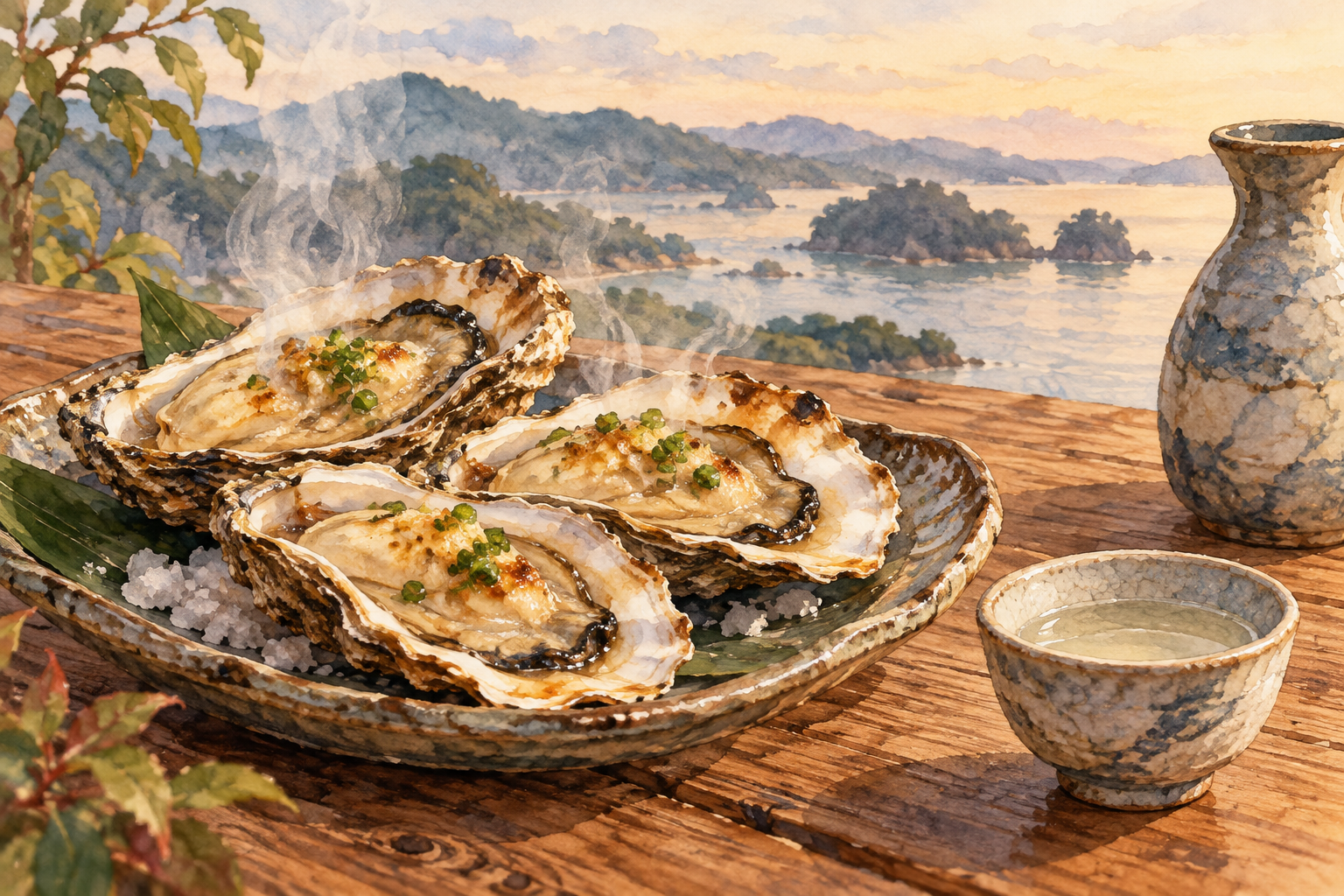
Matsushima Bay is known for roughly 260 pine-covered islets. JNTO’s English guide says the town’s famous oysters are available from October through March and that Matsushima is less than an hour from Sendai Station. In season, the contrast between a busy Shiogama morning and the bay’s broad views makes a natural two-part day. Outside those months, keep the coastal route but build the menu around what local businesses confirm is available.
A proposal angle for travel advisors
For overseas agencies, base the itinerary in Sendai and connect an early Shiogama market visit with sake heritage and Matsushima. This suits culinary travelers, photographers and culturally curious small groups. Confirm oyster season, allergies, raw-versus-cooked preferences, market hours, language support and all brewery arrangements before sale. Provide a non-alcoholic path and enough time to enjoy the bay rather than racing between tastings.
Travelers and travel professionals seeking a carefully verified Miyagi food-and-sake route can contact [Deep Emotion Travel](https://travel.deepemotion.co.jp/) to discuss a tailored coastal itinerary.