Food & Sake · Japan
Ishikawa Sake and Kaga Cuisine: A Journey Through Water, Seafood and Craft
Plan an Ishikawa culinary journey connecting local sake, Kaga cuisine, seafood and tableware, with useful guidance for travelers and travel agencies.
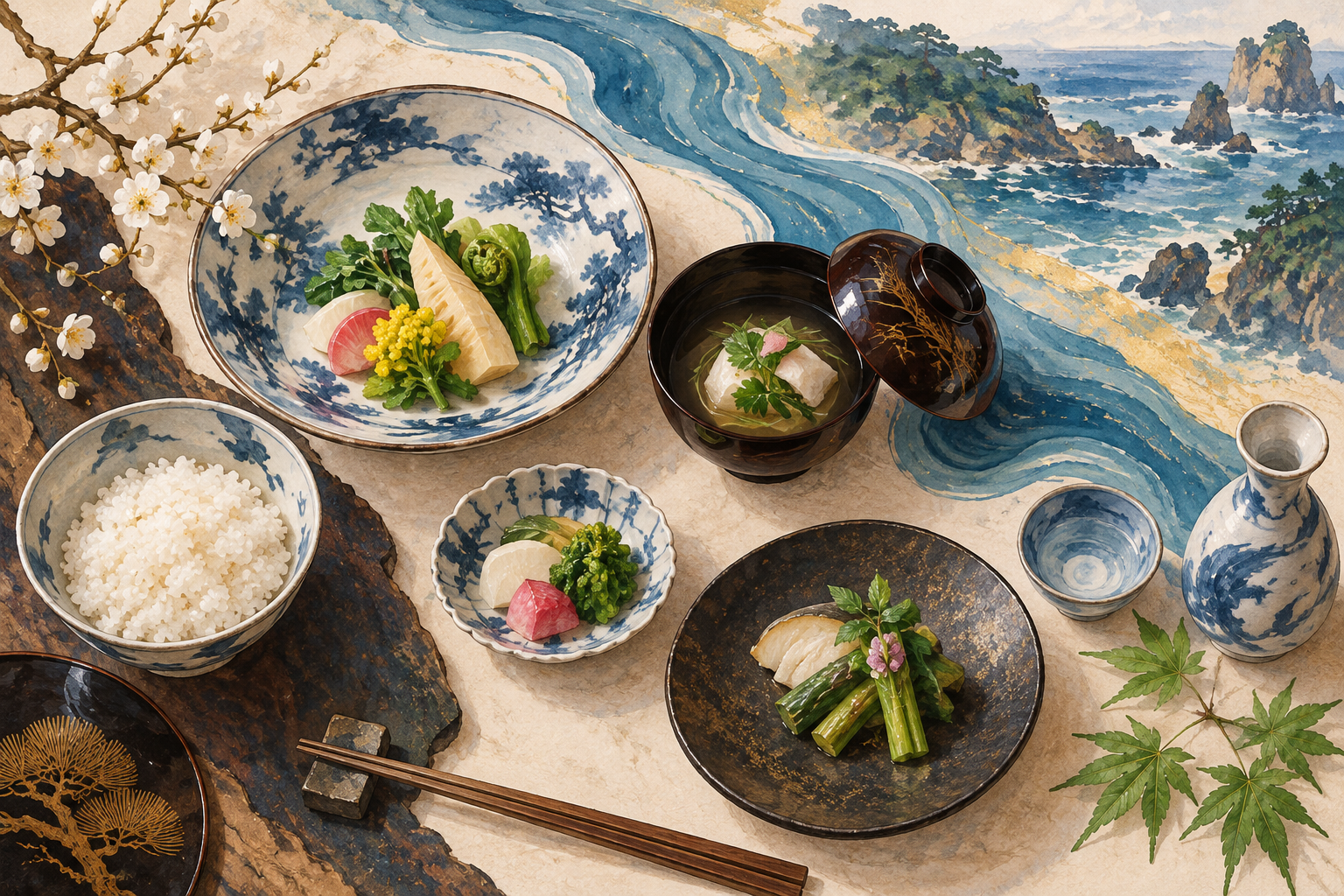
Deep Emotion editorial teamA meal in Ishikawa can arrive like a composed landscape: seasonal seafood, vegetables and simmered dishes arranged on porcelain and lacquerware, with local sake poured beside them. Here, the value of a food journey lies not only in flavor, but in the relationship between water, winter, craft and hospitality.
Understand sake through Ishikawa’s climate

AI-generated concept · OpenAI Image Generation
Ishikawa’s official tourism site links local brewing to pure ground and spring water from areas such as Mount Hakusan. It also explains that cold winters support slow fermentation. Several breweries offer tours or tastings, although individual reservations and conditions must be checked before travel.
The Kaga tourism site describes clear water, rice and koji as essential elements of sake and names breweries in the Kaga City area. It also reminds visitors that sake is diverse: warm or chilled, dry or sweet, sparkling or still. A tasting should therefore be an introduction to local variation, not a search for one supposedly correct style.
Put Kaga cuisine at the center
AI-generated concept · OpenAI Image Generation
Ishikawa Travel defines Kaga-ryori as the prefecture’s local cuisine: multi-course meals using regional ingredients and presented on local porcelain and lacquerware. The same official guide highlights seafood such as snow crab, sweet shrimp and yellowtail, alongside Kaga vegetables, soy sauce and miso. This combination makes the table a meeting point of agriculture, the Sea of Japan and traditional craft.
A thoughtful evening can begin with a small sake comparison, then allow the food to lead. Seasonal seafood may suit one expression while a simmered dish such as jibuni suggests another; these are invitations to notice, not fixed pairing laws. Non-drinkers should receive the same explanation of ingredients, vessels and culinary history.
Connect Kanazawa and Kaga without rushing
For overseas travel agencies, the strongest itinerary may divide the story across two settings. Kanazawa provides markets, restaurants and craft context, while Kaga adds breweries, hot-spring towns and a slower rural atmosphere. Brewery visits must be confirmed directly, including language support and transport.
This structure suits travelers interested in gastronomy, design and cultural depth, because the sake is never isolated from the meal or the vessel. Deep Emotion Travel can create an Ishikawa itinerary that balances brewery access, seasonal cuisine, crafts and onsen. Visit https://travel.deepemotion.co.jp/ to discuss a tailored journey.