Food & Sake · Japan
Yamanashi Wine Country: Wineries, Koshu Grapes and Local Food Near Tokyo
Explore Yamanashi wine country through Koshu grapes, winery visits, local food and onsen, with itinerary guidance for travelers and overseas agencies.
Deep Emotion editorial teamVineyards spread beneath mountain ridges, fruit orchards fill the valleys, and tasting rooms introduce a Japanese wine story that many first-time visitors never expect to find so close to Tokyo. Yamanashi offers a different kind of culinary journey: one shaped by grapes, rural scenery and the rhythm of a winery day.
Meet the Koshu grape in its home region
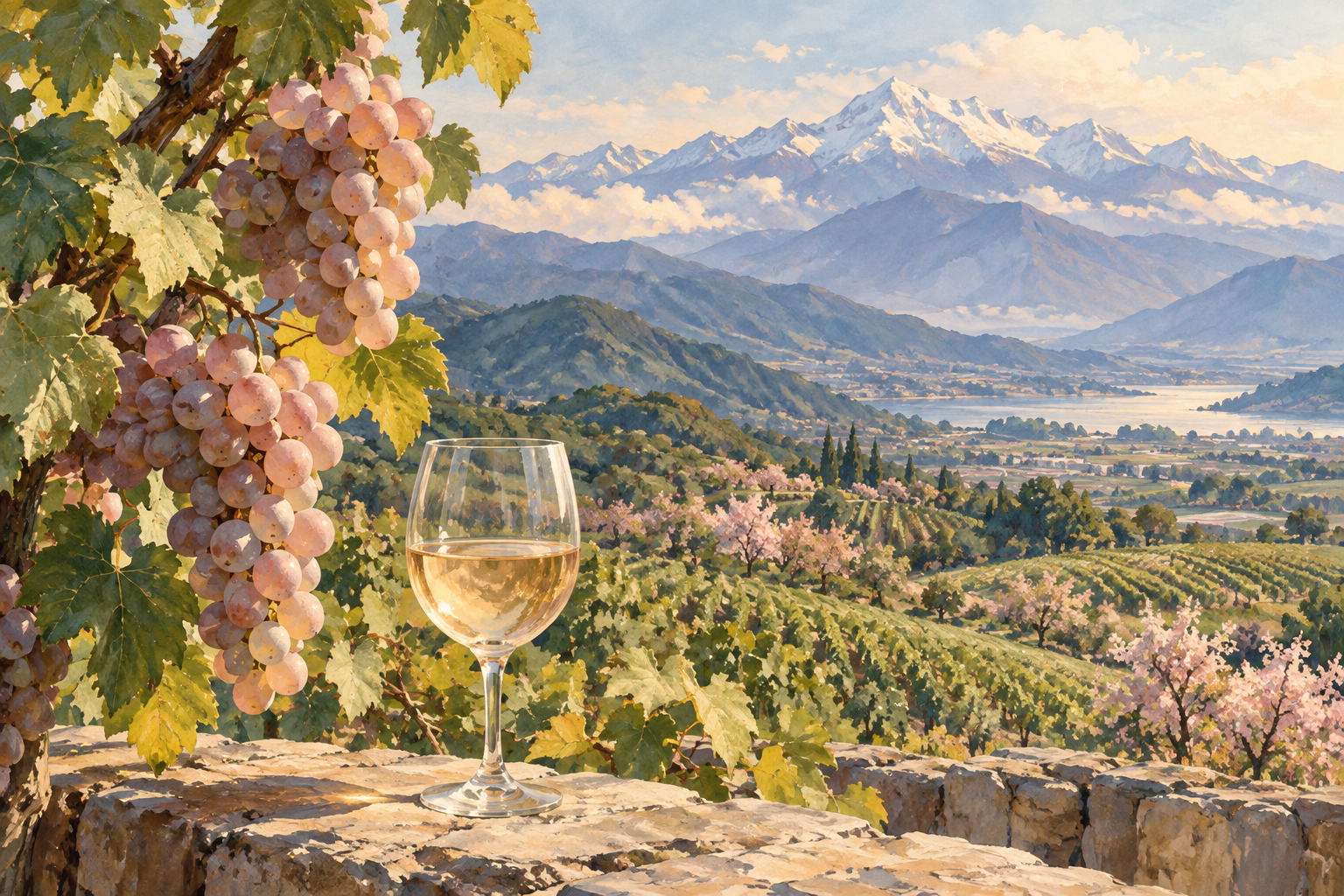
AI-generated concept · OpenAI Image Generation
Yamanashi Prefecture’s official wine site describes the prefecture as the birthplace of Japanese wine, with production beginning around 1870. It identifies Koshu as an indigenous Japanese grape and notes that the region contains Japan’s largest number of wineries. These facts make Yamanashi more than a convenient tasting destination; it is a place to understand how wine became part of modern Japanese food culture.
The official Yamanashi travel guide highlights the Katsunuma and Isawa area, where vineyards around Katsunuma Station offer tours and tastings. Visitors can also learn about local wine history at Miyakoen and the Château Mercian Wine Museum. Every winery operates differently, so tours, language support, transport and tasting reservations should be checked directly.
Place wine inside a broader food journey
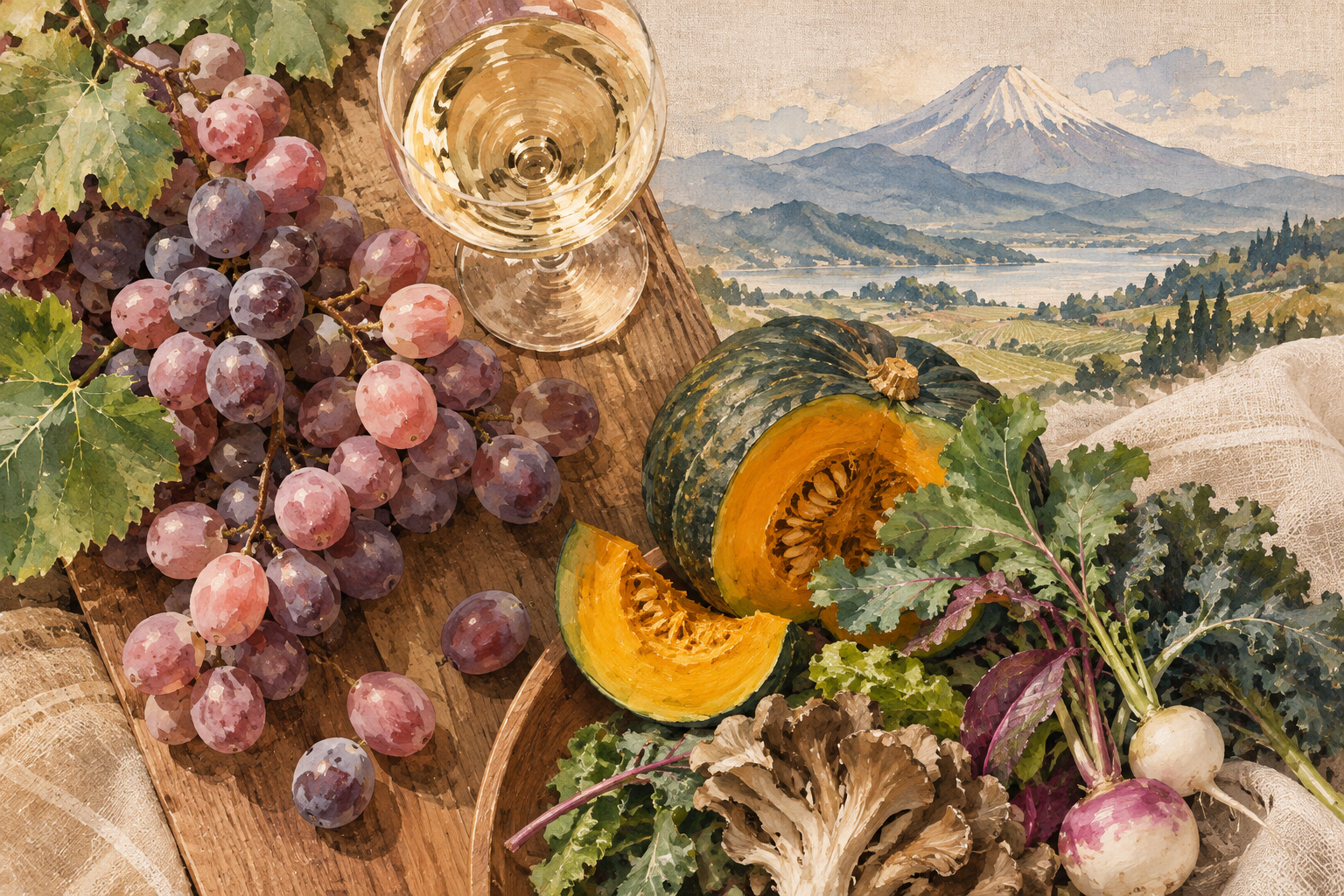
AI-generated concept · OpenAI Image Generation
JNTO presents Yamanashi as a landscape of vineyards and orchards, with peaches, cherries and other fruit playing a major role. It also identifies hoto—thick noodles served with vegetables in a miso-based stew—as a local specialty. A strong itinerary therefore moves beyond wine alone: a vineyard visit can be followed by a seasonal meal, fruit-related experience or restorative stay at Isawa Onsen.
The point is not to force a single “perfect pairing.” Travelers can compare how Koshu wine behaves with lighter Japanese dishes, vegetables or local produce while allowing individual taste to lead. Non-drinkers can share the same journey through orchards, food, museums and hot springs.
Design the day for safety and depth
For overseas agencies, transport is central. A driver who drinks is never acceptable, and winery visits should not be packed so tightly that clients remember only tasting counters. A one-night stay gives the region room to breathe: wine history and tastings by day, local food and onsen in the evening.
Deep Emotion Travel can help create a Yamanashi wine itinerary with current reservations, suitable transport and food experiences matched to the season. Visit https://travel.deepemotion.co.jp/ to discuss a customized journey.